Posts Tagged ‘freelance illustration’

Chronicles in Ordinary Time 25: Yearning to Breathe Free

January 24, 2013

Liberty

I started teaching art in a middle-school, after-school program this afternoon. Two classes, once a week. One digital, one traditional. The first class was survival, the second was a disaster. My battered body complained for about 4 hours after I returned home.
Teachers don’t get nearly the credit they deserve.

When I was in my middle-school years, I lived in almost entirely White neighborhood in Portland. While not particularly prejudiced, I lived in a White world. I was First Generation on my Mom’s side of the family; Second Generation on my Dad’s side. My family came from Scandinavia. I didn’t go to school with African Americans until high school, and was generally in a different program. I knew a couple of Asian kids. My first real conversation with an African American was during my third year of college.  Nearly all of the surnames I heard were of Western European origin.

My class list was filled with surnames I’ve never seen before. Eastern surnames and Western given names.
While many people of my generation would be distressed over the loss of the ‘America’ they grew up in, I see my class lists as evidence that America is working.

“Give me your tired, your poor,
Your huddled masses yearning to breathe free,
The wretched refuse of your teeming shore.
Send these, the homeless, tempest-tost to me,
I lift my lamp beside the golden door!

So many seem to feel that the Golden Door should have been locked and bolted after they arrived.

I see right-wing comments on Facebook nearly every day, speaking of all the people who are taking handouts that aren’t deserved. I don’t go out of my way to meet people, but in 60 years I’ve only met one man who seemed to think that the world owed him a living. For many years, his wife supported that notion; and she worked her tail off, working herself into illness many times.

While I know almost nothing of my Norwegian and Swedish roots, I never forget that I am an immigrant son. My forebears came here looking for a better life. I don’t really know if that better life was found, since I know nothing of the life they left. It is only Grace [unmerited favor] that Scandinavians don’t have brown skin; living so far from the Equator. Americans have never been particularly welcome toward peoples of darker skin colors. Americans used to be opposed to Irish and German immigrants; but they blend in more easily.

C.S. Lewis, in his Reflections on the Psalms, writes that history is filled with writings that have more depth than was originally understood. Prophecy is realized in retrospect, when predictions are discovered to be true; and meanings appear that weren’t possible in an earlier time.
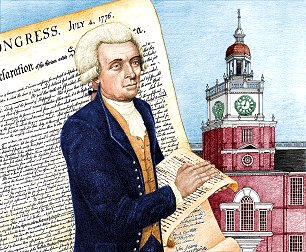
I am of the opinion that the Founding Fathers, when they wrote, “We hold these truths to be self-evident, that all men are created equal, that they are endowed by their Creator with certain unalienable Rights, that among these are Life, Liberty and the pursuit of Happiness,” they were probably talking about White Males. History has enlarged that meaning toward, ‘all [American] humans’.  My hope is that one day it will mean that all people are equal. We aren’t there yet.

We have a Black President; one of the most reviled Presidents in our history. Both adulated and reviled. I am of the opinion that President’s Obamas Nobel Prize was an acknowledgement that at last a Black Man could accomplish that which Americans brag about, but don’t want to see happen. As someone recently quipped [referring to drones], ‘probably the first Peace Prize winner with a hit list.’

We export ‘American Democracy’ as if it was a proven product, forgetting that this is still an ongoing experiment. It’s worked for 237 years, having wiped out the indigenous population. The nations of the other continents existed LONG before we were even thought about. I do not believe in the ‘divine right of kings,’ nor do I believe in the Empires of the past. This country frequently appears to be attempting to create an American Empire, a plutocracy. As Churchill stated, “democracy is the worst form of government; except for all of the others that have been tried.” Can we rule ourselves?

Perhaps my students and their peers can finally make that happen.
Declaration cover

Chronicles in Ordinary Time 22: Recent Images

November 9, 2012


Photoshop Humor

Images inspired by the Grand Staircase in the movie, ‘Titanic’

cropped version:


Illustration from a ‘work in progress’ children’s book:


Chronicles in Ordinary Time 20: Freelancing

September 16, 2012

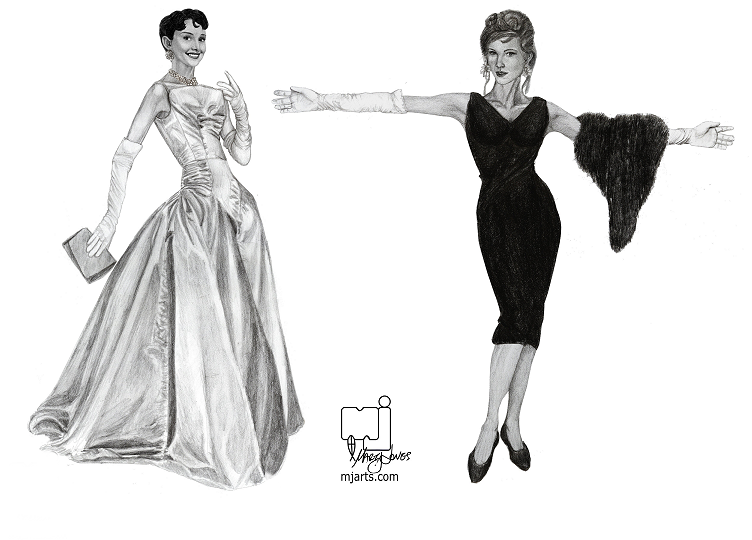
1950's fashion models

The images above are for a fashion-industry product launch that is supposed to happen in the near future.

A long time ago, in what seems like another lifetime, I was involved with a direct sales organization. While I had some talent for selling alarm systems and water treatment systems, it wasn’t a way of life that interested me. I had aspirations for the potential lifestyle, but in order to have that lifestyle,  I was trying to be someone that I  really did not want to be. I did gain some valuable insights into Life, and the experience changed me in a positive way.

One of the things I found most valuable was to find out whether or not an ‘expert’ really has any experience with the subject being taught, or whether the information comes from books and classes; and has never been practiced. I once met a man who was teaching a college class in Small Business. When I asked him about his experience, I discovered that his only ‘Small Business Experience’ was the Small Business classes he had taken in college. He’d never owned nor operated a small business. He didn’t have any life experience to pass on to others. But he was getting paid to teach students who wanted to learn how to run a small business. This doesn’t make sense.

When I started this blogging gig [a form of marketing], I decided that I would only write about things I’ve experienced; rather than attempting to present a picture of myself that isn’t real. The other night I spent a couple of hours retouching some images for a client– removing some unwanted inches and some unsightly cellulite. She’s using the images on a personal website; but the reality is that her published appearance will be an illusion. In our media-rich world of the present, it is very difficult to separate illusion from reality.

Back when dinosaurs ruled the earth, it never occurred to me to do much research regarding college and career paths. In high school I drew; and enjoyed technical illustration. I assumed that since I could do that in high school, I would be able to do the same thing in college. Bad assumption. When I arrived at Oregon State University, my only options for drawing as a major were architecture and art. I didn’t really want to spend my life drawing houses [I never had grand aspirations], and I’d always heard the term “starving artist”. Majoring in ‘starving artist’ seemed like a waste of time and money, so I chose architecture.

My first career, after my 5 years of college and my professional degree in Architecture, was construction. I soon learned that all that was needed for being a contractor was a pickup, a Black Labrador, a hammer and a Skilsaw. I never did find a Black Lab. I had children, instead.

In between careers #1 and #2, I worked briefly for an architect; and confirmed that I didn’t want to spend my life drawing houses– more specifically, apartments. And yet, career #2 found me reviewing house plans for Building Permits. I eventually ‘graduated’ to high-rise buildings and block-square commercial developments. Life is humorous…

On doctors’ orders, after 14 years with the City, I moved on to career #3–that of a Building Code/architectural consultant; and freelance commercial artist/illustrator. My self-description varies with the month and the nature of the work I’m doing. At present, “commercial artist” is the favored description. Partially because no one uses that terminology anymore…

I really can’t recommend the life of a freelance commercial artist. Generally, it sucks. I spend far more time marketing myself than actually earning any money. The images above were ‘pro-bono’–the only income I might derive is from referrals somewhere down the road. Someone else, in theory, will earn some money because I created the images. However, I volunteered for the opportunity,  so I’m not really justified in complaining. I would prefer a world where I got paid for the hours involved in creating the images.

I never have tried to get a job as an illustrator/commercial artist. I’ve learned that I really don’t make for a good employee; I’m too opinionated about my work. I don’t like being told to create something I disagree with. Sometimes I have to make design decisions I don’t like, but I do it voluntarily, rather than by being told to, ‘do it, or else… ‘ I prefer the option of choosing to decline the opportunity.

I was paid for the images below. They are images that are in the background of a much larger composition– “extras” in Hollywood terminology. The scene in which they are present is based on  a scene from the movie “Titanic”. The cast was selected from people in my portfolio; images created for other purposes. I wasn’t paid much for these particular images, but I was paid to draw while watching a movie. Can’t beat that.

I spend 2-3 hours per day trolling Craigslist; looking for ‘creative gigs’ across the country. I often spend an hour or two adapting a prior illustration to fit with a particular job description that interests me. When I was a Building Contractor [CEO of a corporation, for that matter], I was taught that a 4% return on a mass marketing campaign was a good return. 4 out of 100; more accurately, 40 out of 1000. One might have to go through 900 rejections before the first positive response is received. That’s a lot of rejection, if one looks at in that manner. It’s better to simply regard it as valuable information, and the cost for a success.

My experience with freelance illustrating is fairly similar. I think I get more favorable responses than 4 our of 100 jobs I inquire about.  It might even be as high as 10%. I don’t do the math; it can be discouraging. Out of the jobs I do get responses for, I probably earn something similar to minimum wage, if I count every hour I invest in a project. However, not every hour is a justifiably billable hour. Sometimes I have to do a lot of experimenting to finally arrive at an idea that works. Billing a client for experimenting is probably justifiable, but at the end of a day of experimenting, I might not have anything of value to show the client for that day’s work. I try to base my fees on what I think an outcome is worth, rather than the amount of time invested on my part. Not necessarily a smart way to do business, but I rarely have clients who complain about my work.

It would be smarter to get a job; and I’m continually thankful for the retirement income I earned from my 14 years working for the City. We manage; and we’ve had to live a limited lifestyle. We don’t travel, we don’t eat out much; we rarely go to concerts or do activities that cost money to attend. We don’t buy stuff that we really don’t need.  For some, this would be intolerable. For those who want to live the lifestyle advertised on television: don’t become a freelance artist.

Chronicles in Ordinary Time 19: The Power of Story

August 25, 2012

Last night I finished the last, and 100th episode of Stargate:Atlantis; not without a measure of sadness. The Story is over.  Prior to that I watched the 213 episodes of Stargate: SG-1. The better part of the sadness is the realization that I was working on my laptop during most of the episodes, so I can watch them again and still have the story be fresh.

I saw some of the SG-1 episodes when they were first aired; this was back in the time when we didn’t have a television in the house. We borrowed my Mom’s portable TV on occasion; and watched TV at her house on Sundays. Back in the early ’80’s, when I was self-employed as a building contractor, I used to watch “Cheers” and “Hill Street Blues” every Thursday night. At some point I finally realized that NBC wasn’t paying me to watch their shows; and I was turning down opportunities to bid on remodeling jobs, fearing that I might not return on time… So, the television went into the closet. When we moved to a different house, the TV did not accompany us. Our children grew up having television as a special event. They read a lot of books.

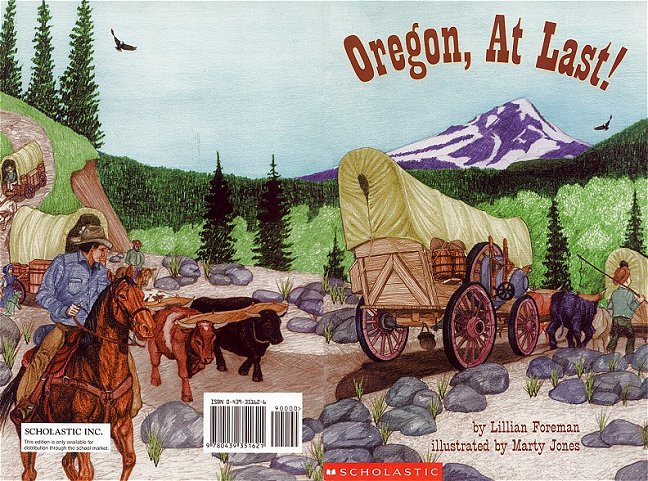
I got into this illustration gig to be a storyteller.

children's book jacket: Oregon At Last

Oregon At Last by Lillian Foreman, Scholastic Press, digitally colored graphite drawing

This is the cover of my first illustrated children’s book; one might think that people here in Oregon might be familiar with it. However, it was part of a 5th grade curriculum package for Scholastic, and they never bothered to market it in Oregon…

Back in the days when the world was in black and white, before color had been invented, I went to the bookmobile every week, and returned with a stack of books; mostly science fiction, if memory serves. The bookmobile was a mobile library. A converted bus with library shelves instead of seats, the bookmobile was used as a supplement to regional libraries. It had a regular route, and helped me get through my elementary school years. I had a small portable television in my bedroom, but there were only 5[?] channels available, and the selections weren’t necessarily interesting.

I grew up with the illustrations of Howard Pyle and NC Wyeth as well as several of their contemporaries. When I decided to do this illustration gig in the 1990’s, I envisioned following in the footsteps of Norman Rockwell. As big as my feet are, I knew I would never fill those footprints.

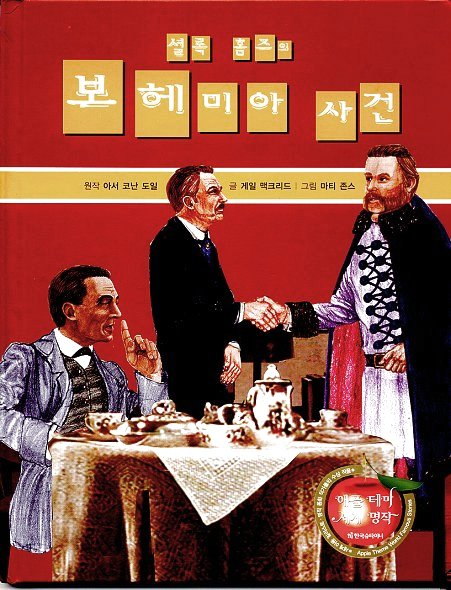
I was thrilled when I had the opportunity to enter the world of one of my childhood heroes, Sherlock Holmes…

A Scandal in Bohemia

A Scandal in Bohemia by Sir Arthur Conan Doyle. Digitally-colored graphite drawing; copyright Steiner Korea

I continue to hope that this will be followed by another Holmes opportunity in the future, but it seems unlikely, at this point.

Stories teach us to dream; they show us what and who we can be. Music, movies, books, stories around the campfire… these are the elements that can shape our lives. Stories can lift us beyond our circumstances.

Would we have cell phones today, if not for Star Trek and Dick Tracy?


Chronicles in Ordinary Time 15: wormholes

March 26, 2012

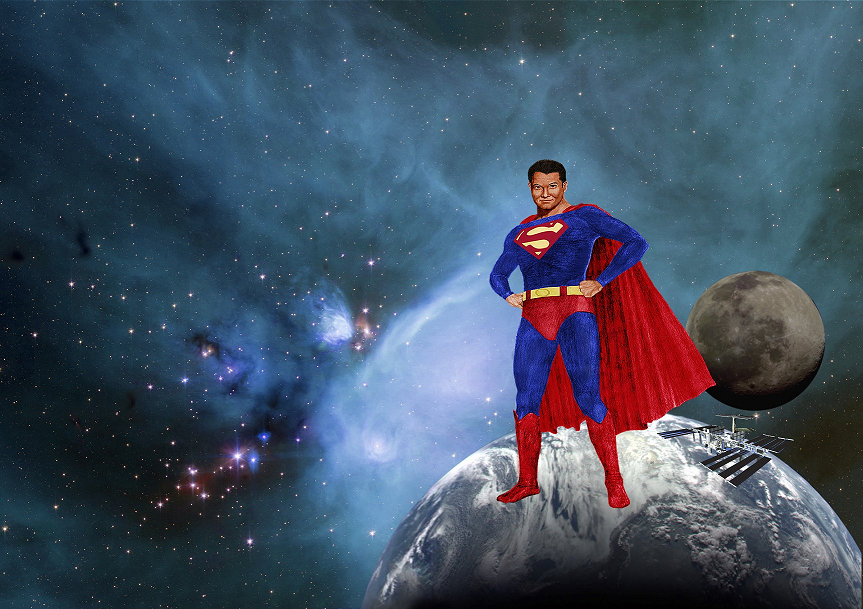
I spent [wisely] several hours today watching the Science Channel’s “Through the Wormhole;” an overview of quantum physics, cosmology, astrophysics and the history of modern science. I don’t have any other space images in my collection of illustrations…

As they were growing up, I advised my kids of a saying I learned in my ‘hippie’ days [I can remember the 60’s & 70’s; consequently I wasn’t really there]. “Whatever you own, owns you.” This includes the ownership of indebtedness. If my life had been different, I would be ‘semi-retired’ by choice, at this time rather than by circumstance of economy.  My 14 years with the City were an investment I didn’t understand, and keeps a roof over our heads during this uncertain time. Nonetheless, my indebtedness means my wife and I still need to be employed, rather than enjoying the early retirement of some of my colleagues.

If I had the time to create the illustrations I want to create, instead of focusing my time on trolling Craigslist, I’d have more ‘space’ images.  I loved science fiction novels growing up; now I enjoy [some] sci-fi movies; I can go through a story in two hours. My current reading is classic novels, and they take a long time, due to the  limited amount of time I allocate for recreational reading.

A lot of religious folk get really spooked by cosmology. They’ve been taught to read the Bible as a literal textbook for science and history; rather than as a journal of the Eternal’s interactions with a family line of humans. The Richard Dawkins’ of the world find solace in mathematics and physics; and decide that since they find evidence that the universe can exist without a Creator, it must be so. ‘The need for a Creator’ coming from propaganda. I look at cosmology as an attempt by very finite, very limited human beings to understand the language of the Infinite and Eternal Creator of everything. A mentor of mine taught me that the Bible is, in reality, God’s ‘baby talk’ for his ignorant children.  I’ve never understood the Eternal to be some sort of ancient grandfather figure who occasionally entertains his descendents with magic. That’s probably because I had a personal encounter with the Creator during a period when I was in my twenties; and everything since then has been the ‘acquisition of background’ more than following parental teaching. I had none.

So, I’m fascinated with astrophysics and cosmology. I’m also fascinated with theology. Moses Maimonides, a Jewish rabbi of the 12th Century, taught that, at the Beginning,  all of the material in Creation was condensed by the Eternal into the space of a mustard seed; and was rapidly ejected outward into the heavens. The Expanding Universe, 400 years before Galileo. Maimonides found this information in his extensive study of Holy Torah. He also taught that the first letter of Torah, in Hebrew was closed in the backward direction; there was no reason to seek out what happened before Creation. He hadn’t run into many modern cosmologists.

I’m revisiting Stargate SG-1; a sci-fi show of the nineties[?]. I’d forgotten how much I enjoyed the series. And I enjoy the references to Star Trek and Star Wars. I’m continually impressed at the way that science fiction and science fact interact and depend upon each other.

Thou hast made us for thyself, O Lord, and our hearts are restless until they find their rest in thee..” Augustine

Chronicles in Ordinary Time 13: the predicament of nuclear man

February 27, 2012

Today is my 39th Re-Birthday.

The first part of Henri Nouwen’s “The Wounded Healer” [The Search of Nuclear Man] describes my theological quest for meaning in life: “When we look around us we see man paralyzed by dislocation and fragmentation, caught in the prison of his own mortality. However, we also see exhilarating experiments of living by which he tries to free himself of the chains of his own predicament, transcend his mortal condition, reach beyond himself, and experience the source of a new creativity.”
Using Nouwen’s categories, I was a Mystic in a time of theRevolutionaries during the first half ‘the seventies’. Too bound by my upbringing to truly become a Revolutionary–I considered emigrating to Canada to avoid the Draft, but didn’t have the nerve. I was ‘saved’ by a very high draft number. Had I been born 4-6 hours earlier in my 10-month gestation, I would have probably become a 2nd Lieutenant in Vietnam, with a 20-minute life expectancy. I had no religious beliefs nor upbringing, so I could not become a conscientious objector; even though that was an appropriate definition.

I came to life in college.
I really have very few memories from childhood. Memories from our family cabin on the Sandy River, near Brightwood, Oregon. Some hormonal experiences/dreams. Some boring trips to my grandmother’s house in Condon, Oregon. Memories of my Grandparents’ house. Helping my ‘Grandfather’ [great uncle] build their last house. Riding my bicycle/jumping off of my bicycle onto our lawn. Playing in the back yard of my across-the-street neighbor/best friend, Bobby. There are more memories from high school, although not a lot. Memories of my best friend, Pete; and my other best friend, Mark. Pete remains on the periphery of my life; Bobby and Mark are absent.
For many years, I felt as though I could clearly remember every day of my two years at Oregon State. Discovery. The beginnings of an understanding of who I am. Chronic despondency. Hours and hours in my darkened room, listening to the dreary music of Rod McKuen and other folksingers who saw the problems of life, but had few suggestions for improving the situation.
“In the absence of clear boundaries between himself and his milieu, between fantasy and reality, between what to do and what to avoid, it seems that [he] has become a prisoner of the now, caught in the present without meaningful connections with his past or future. When he goes home he feels that he enters a world which has become alien to him. The words his parents use, their questions and concerns, their aspirations and worries, seem to belong to another world, with another language and another mood. When he looks into his future everything becomes one big blur, an impenetrable cloud. He finds no answers to questions about why he lives and where he is heading. [He] is not working hard to reach a goal, he does not look forward to the fulfillment of a great desire, nor does he expect that something great or important is going to happen. He looks into empty space and is sure of only one thing: If there is anything worthwhile in life it must be here and now.”

At University of Oregon I encountered The Eternal. I lived across the hall from two of those ‘annoying Christians,’ who in time, became close friends; Brad remains my spiritual ‘father/big brother’. After months of asking, I finally agreed to go with them to their Sunday night meal and Bible study at the pastor’s house. One gathering sticks in my mind; the group was kneeling in a circle at the end of the evening, praying; and I realized that these people were not delusional, they actually were in contact with someone I did not know, nor had ever heard about.
“For the mystic as well as for the revolutionary, life means breaking through the veil covering our human existence and following the vision that has become manifest to us. Whatever we call this vision-“The Holy,” “The Numinon,” “The Spirit,” or “Father”-we still believe that conversion and revolution alike derive their power from a source beyond the limitations of our own createdness.”

While I consider today to be the anniversary of my rebirth, it really didn’t happen on an individual day. It probably started in my second year at Oregon State, when I told my good friend, Jeff, to quit bugging me about his newly-found belief in Jesus: the story of the druggie that had an overnight conversion and became a street preacher. Our 2am sessions in the dorm hallway, Jeff singing Crosby, Stills and Nash in a voice like Neil Young; and then singing strange Christian songs in the same voice. He moved his ministry to University of Oregon after I wrote  a lonely letter describing my living among strangers. The conversion process continued actively for my next three years at U of O and my first couple years after college. By the time I was 28 I was indelibly altered.

After nearly 50 years of an artist’s life, I really can’t find a single image that represents my coming to faith. Which is probably why I consider myself an illustrator rather than an artist. I don’t do well with creating abstract images; and the conversion to faith is an abstract process. The Apostle Paul’s description of life as a battle may have something to do with my fascination with Asian martial arts movies, even though I’m a pacifist. One of the reasons I could not honestly become a member of the Society of Friends [Quakers]; even though their beliefs are probably more along the lines of my own than the conventional Protestant church.

“…and the monstrous creatures of whales” [below] probably represents my faith most adequately, although I really don’t know why.  The Eternal cannot be described in an image; the wonder of Creation can perhaps best be described by the ocean of the South Pacific [I’m not familiar with the South Atlantic]. Warm, teaming with life, teaming with Wonder. I invested two years of my life creating the full-size image from which the image below is derived; in the *interesting* nature of my life, I can’t justify the expense of printing the image in its glory…

Chronicles in Ordinary Time 9: Occupying Our Hearts

November 13, 2011

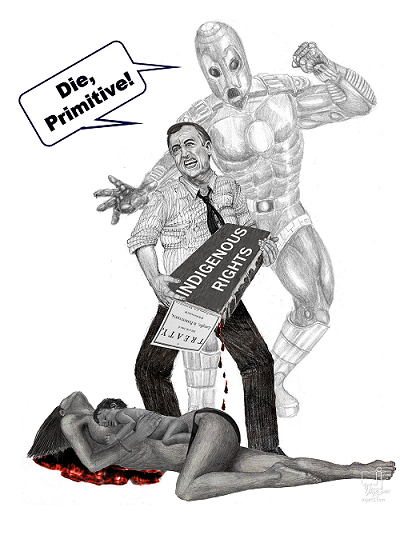
This illustration was created for Ken Gunther, for an upcoming book to be published by Gaiadigm Books.

Somewhere in the eighties I started drawing Native American portraits, some of which were compiled in the image below [John_10-16]. The process of searching for new images became a study of our government’s treatment of the indigenous peoples who lived here before the Europeans came; and the slaughter of those Nations.

Nations. Our government recognized these peoples as Sovereign Nations, and prepared Treaties with these Nations; and then systematically broke all of the Treaties.

In the image below, the words in the oval on the left state that the purpose of most of the early colonies was evangelism; over time the presence of the Native Americans became an obstacle…

“Our manifest destiny is to overspread the continent allotted by Providence for the free development of our yearly multiplying masses.”
John Louis Sullivan, 1845

“In treachery, broken pledges upon the part of high officials, lies, thievery, slaughter of defenseless women and children, and every crime in the catalogue of man’s inhumanity to man, the Indian was a mere amateur compared to “the noble white man.” His crimes were retail, ours wholesale.”
Lt. Britton Davis, 1884

In the image below, the oval on the right offers quotations from half a dozen “Indians” who spoke words that should have come out of the mouths of Christians of that time. Words that echo what Jesus taught.

The Lakota used a metaphor to describe the Europeans who arrived on their lands.
“It was Wasi’chu, which means “takes the fat,” or “greedy person.” Within the modern Indian movement, Wasi’chu has come to mean those corporations and individuals, with their governmental accomplices, which continue to covet Indian lives, land, and resources for private profit.
Wasi’chu does not describe a race; it describes a state of mind.
Wasi’chu is also a human condition based on inhumanity, racism, and exploitation. It is a sickness, a seemingly incurable and contagious disease which begot the ever advancing society of the West. If we do not control it, this disease will surely be the basis for what may be the last of the continuing wars against the Native American people.”
…excerpt from Wasi’chu, The Continuing Indian Wars,
Bruce Johansen and Robert Maestas
with an introduction by John Redhouse
[ http://www.dickshovel.com ]

Evangelical Christians in the US seem to have a short memory. We talk about being a nation ‘blessed by God’ and overlook the slaughter of the Nations that were here at the beginning. We overlook Hiroshima and Nagasaki as crimes against humanity. And somehow we call our nation “blessed”. How can we justify these actions of the past as Christian actions?

The “Occupy…” movements of today, I believe, are a reflection of the some people’s recognition of the spirit of Wasi’chu among us. We live in a country of vast inequalities. I do not believe the answer is simply “redistribution of wealth”. When the wealthy refuse to be taxed at the same rate as the non-wealthy, at the expense of “social services,” I think we have a problem of Wasi’chu.

What Would Jesus Do?
I don’t know; the Gospels do not include any instances of “Occupy Jerusalem”. Jesus lived under the foot of an Emperor; and such movements would have probably ended with death and maiming.

In an interview with Gary W. Moon written in “Conversations
Journal” [ http://www.philipyancey.com/wp-content/uploads/2011/11/WhatGoodIsGod-Yancey-and-Moon.pdf ], Philip Yancey writes:
For one thing, Jesus didn’t live in a democracy; he lived under an occupying power, the most powerful empire of its time. In such circumstances, you can either accommodate the ruling power, as the Sadducees did, or violently oppose it, as did the Zealots. Jesus mostly ignored it. He said nothing about the brutality of the Romans or some of their nefarious practices, such as gladiator games, pederasty, and the abandonment of infants. His guiding principle, “[Give] unto Caesar the things that are Caesar’s, and unto God the things that are God’s,” is wonderfully ambiguous (Luke 20:25, ASV).

GWM: So, if you could write a one or two-sentence prescription for the
church in the US and you were sure it would be followed, what would you prescribe?
PY: Spend less time and energy trying to clean up the culture around you—a task Jesus and Paul did not seem concerned about—and more time and energy creating a counter-culture that presents a compelling alternative while exposing the shallowness of its surroundings.

I don’t think I can say it any better.