Posts Tagged ‘persistence’

Chronicles in Ordinary Time 83: The Search for Meaning, Part Two

October 25, 2015

I meant to send this out later in the week; I just watched a movie that changed my mind.

Della's Brain“Della’s Brain”

We can change the way we think.

The flashes of light in the above image represent the electro-chemical signals that cross between connections in our neurons. The flashes of light represent thoughts in Della’s mind. What those thoughts are, are known only to Della…

Our brains contain thousands of neurons, and tens of thousands of connections between those neurons. Dr. Eagleman, quoted in Chronicles in Ordinary Time 82, comments that about twice as many connections are created in our brains in the first two years of life than we normally use as adults. I don’t think these connections disintegrate, they simply stop being used. The fading of memory isn’t due to degradation of the nerve cells that make the connections; it’s simply due to the fact that we aren’t using those connections very often. The pattern, the map, between those connections and our conscious mind is still there; it just takes a while for the connections to be made.

We have the ability to make new connections between the neurons that register ideas, and we have the ability to think in new ways. During the teenage years we start questioning our parents’ beliefs; we can choose to follow them, or not. We can make new connections between our ‘stockpile’ of past experiences and sensations, and come to new conclusions. These new conclusions can change our lives.

We can change the way we think.

Prejudice starts in the mind.

Hatred starts in the mind.

Healing starts in the mind.

My appendix ruptured in 1988, and I came close to dying from peritonitis—an infection of the membranes that hold our internal organs in place. The docs pumped me full with antibiotics, and killed my immune system while killing off the bacteria. A ‘napalm process’—while killing off the bacteria that was damaging my body, the bacteria that aids my body was killed off as well. For the first few months, I caught every germ that entered the Portland Building.

I did a lot of research during the 6 months it took me to fully recover; I discovered that adult-onset appendicitis was frequently a result of stress that had occurred in the patient’s life. For most of the year before the appendicitis attack, I was heavily involved in the fund-raising for, and the care of my sister, who needed a liver transplant. I firmly believe that the circumstances around her transplant were miraculous—I perceived the working of the Creator in the events that took place, and soon the events began running ahead of us.

I realized that if Donna’s new liver was connected to the Miraculous, then my appendicitis was in some way an extension of that miracle process. I don’t believe in coincidence. I don’t believe in accidents. I gave my life to my Creator 40 years ago, and asked [Him] to direct the events of my life. Therefore, the appendicitis wasn’t a surprise to the Creator; it was only a surprise to me.

In the early weeks of recovery from the peritonitis, it became clear to me that there was a ‘connection’ between my experience of a diseased appendix and past anger that I had toward my Dad; the anger wasn’t so much about the man he was, or what he did, but the reality of the father he wasn’t; the father I had wanted. He wasn’t very good with Grace; I doubt that he’d ever experienced it. I could be wrong—we never talked.

I realized that the anger I had felt toward him was gone—the burst appendix was like a boil that had been lanced. New connections had been made while I slept for days. I believe I was Healed. The healing of my anger did not remove the patterns of behavior I had learned while protecting myself from my Dad’s loud behavior. Changing many of
those patterns became part of the work of bringing my own children into this world.

I realized that my Dad was probably very much like his father, and that family of wheat ranchers—he didn’t know how to do things differently, because he hadn’t had a different role model. I decided, with the help of a lot of books and tapes, that I could cause myself to become more like the father I had wanted. I could change my life. It required the making of a lot of new connections in my brain.

I grew up without a concept of faith. The Creator wasn’t a part of my thinking until my college years; and the change of thinking mostly came from religious people who got in my face… And then the Creator ‘hit me upside the head’ in my third year; and I started making a serious change in the direction I traveled. It was at least a 45-degree turn, maybe as much as a 90-degree turn. I began looking at the circumstances and emotions of my life, and started seeing them in a new light. This is the actual definition of the word that is translated from the Hebrew and Latin as “repent.”

“God loves you and has a plan for your life”—a phrase that usually gets heard when bad stuff happens in one’s life. Often the people who say such things don’t really think about the concept that in effect says, ‘oh, God gave you cancer so that you can learn something.’ I’ve struggled with such concepts for the last 40 years. One of the guys in my life at present is angry at the god he doesn’t believe in because that god
allows people to be tortured by pain and death. He sees his cancer-related pain as torture that keeps him from being able to do the things he wants to do with what’s left of his life.

I experience a large amount of pain each day; several neurologists have no idea why it has occurred. “Idiopathic sensory nerve disorder.” A description, rather than a diagnosis. I have pain all over, even in places that have no external sense of touch. The most likely candidate [meaning, the one that hasn’t yet been ruled out] for a cause appears to be the large amounts of analgesics and muscle relaxants I consumed while working for the City of Portland for 14 years. I got through each
day on pain meds and I possibly poisoned myself in the process. Now I work at living without pain meds, in hopes that some of the damaged neurons will heal. Instead of viewing my pain as torture, I use it to help me learn compassion for a whole lot of people who deal with much larger health challenges. It’s a matter of perspective. The pain doesn’t disappear, but the fear of pain can diminish. I learn not to react to pain.

Does God have a plan for my life? I think ‘the plan’ is that I was created with a brain that is capable of changing the way I perceive the world. I learn to make new connections in my brain when I encounter new situations. I don’t believe that anything will happen in my life that is larger than the Creator can use for [His] own purposes. Occasionally it seems as though the Creator dips a hand into the ‘river of my life,’ and alters the flow; usually this happens in a manner that I cannot prove, and it usually only has a direct effect on me. Broken cars that mysteriously come back to life without the aid of a mechanic or tools; events that come strangely together in a manner I could not predict. However, the Creator is not a genie; I can’t rub a lamp and get my wishes fulfilled.

Shit happens in my life; and good stuff happens in my life. I can change my attitude toward the rotten stuff by making a conscious decision to view life differently. I know each day that I am surrounded by the prayers of people who pray for me. Some of you who are reading these words are lifted up in prayer by me, each day. Some of you are supported in prayer by people you don’t know, because I’ve told others of your needs. I think the prayer makes it easier to make new connections in your brains; and these changes can strengthen the soul we cannot see.

I can’t download faith into anyone. I wish I could. There IS Light in the darkness; and that Light is on a wavelength that is easy to miss unless you are looking for it. Sort of like Luminol fluorescing when in the presence of ‘alternate light sources’. Or wearing 3D glasses to watch the movie—there’s a depth to life we can’t normally see, because it isn’t hardwired into our brains. We have to choose to look for it, and keep working at seeing the Light in the midst of ever-growing darkness.

Stars [1926]““Stars” Maxfield Parrish [1926]


← Back

Thank you for your response. ✨

Chronicles in Ordinary Time 80: They Changed the World

September 18, 2015

your life isn't about you PKDYour life is not about you.

A guy I know would say that the above statement is absurd; of course his life is about him. To his mind, there is nothing more in life than his life. Nothingness follows his life. What will be left behind from his life [from my perspective] is a bunch of broken relationships; because, his life is only about him…

Your life is about others.

You will be remembered for what you did for, or to, others. If your life has never been about others, or has only been for others as some benefit to your own life, then your life has been wasted. You may be remembered, but not fondly.

This wasn’t the message I was raised with; it took a lot of effort for me to understand. Looking back, it didn’t seem like effort; I wanted to live my life in a way that I wasn’t seeing very often in this world; and I realized I needed new information.

Fortunately, there are far more people in this world who choose to be remembered because they did something positive for another person, rather than by choosing the negative.

Our American society tends to make villains into celebrities; mass murderers who somehow become celebrated for the pain they inflicted on others. Because we tend to make villains into celebrities, those who have been given no real value by the ‘others’ who raised them feel that “15 minutes of fame” as a monster, somehow equates with a life that has meaning. They were here; they made a statement. When historians look back, they will find the tale of a monster…a person remembered because they were ‘bold’ as a monster… Maybe there will even be a cable television series about his exploits…

How many lives have you saved by the simple act of driving safely? We may never know until we arrive at Home. It’s easier to count the damage done while driving with our minds elsewhere. We generally don’t get credit for doing a job ‘well’—the way the job is supposed to be done. The reality is that the reason for driving well is others. Not to avoid traffic tickets; not to see if you can manage to avoid getting caught; driving well is a gift you give to others. Doing your job well is a gift you give to others.

Your life is not about you.


This week I watched the PBS biography of Walt Disney on American Experience. I would not have enjoyed working for Disney; although a part of me wishes that I had left Eugene, Oregon in 1975 and headed for Los Angeles, to work full-time as an illustrator. In the late 1930s Disney’s crew worked 12-18 hour days in order to complete Snow White on time; the background painters, inkers and ‘in-betweeners’ worked for minimal pay [it was the Depression, and most of the painters and inkers were women—‘any knucklehead can do that job’]; while the ‘creative talent’ was paid well for their work. In the years following World War II, Disney employees went on strike for higher wages, wounding Disney deeply; this forever changed Walt’s vision of the world he wanted to create. As with many creative geniuses in the Art world, Disney was a tyrant, who had an entirely different persona displayed on camera, and with his family.

To a degree Disney’s life was about others; but for the most part, his life was about him. His highest praise, in general, was ‘that will work’. He chose a career that depended upon people liking what he created. The struggle every commercial artist faces, regardless of the form in which the art appears.

If one provided Walt with what he wanted, on time and in good order, Walt was a friend. He wanted the Disney studios to be ‘families’ [albeit dysfunctional ones]; with himself as the father, and his artists as ‘his boys’ [gender bias noted]. Loyalty was rewarded; disloyalty was not permitted.

In 1937 he premiered that which his detractors called, “Disney’s Folly”: Snow White and the Seven Dwarfs”. The movie that changed animation forever. The movie that proved that ‘a drawing can make an audience cry’. The wonder of those early images is lost on modern viewers; we’ve become accustomed to sophisticated imagery.

When I heard the words, ‘he wanted to prove that a drawing can make an audience cry,’ a chord was struck in my ‘heart’. While I’ve never used those words, I can understand them. I’ve had ambitions of artistic immortality. I doubt that this will happen.

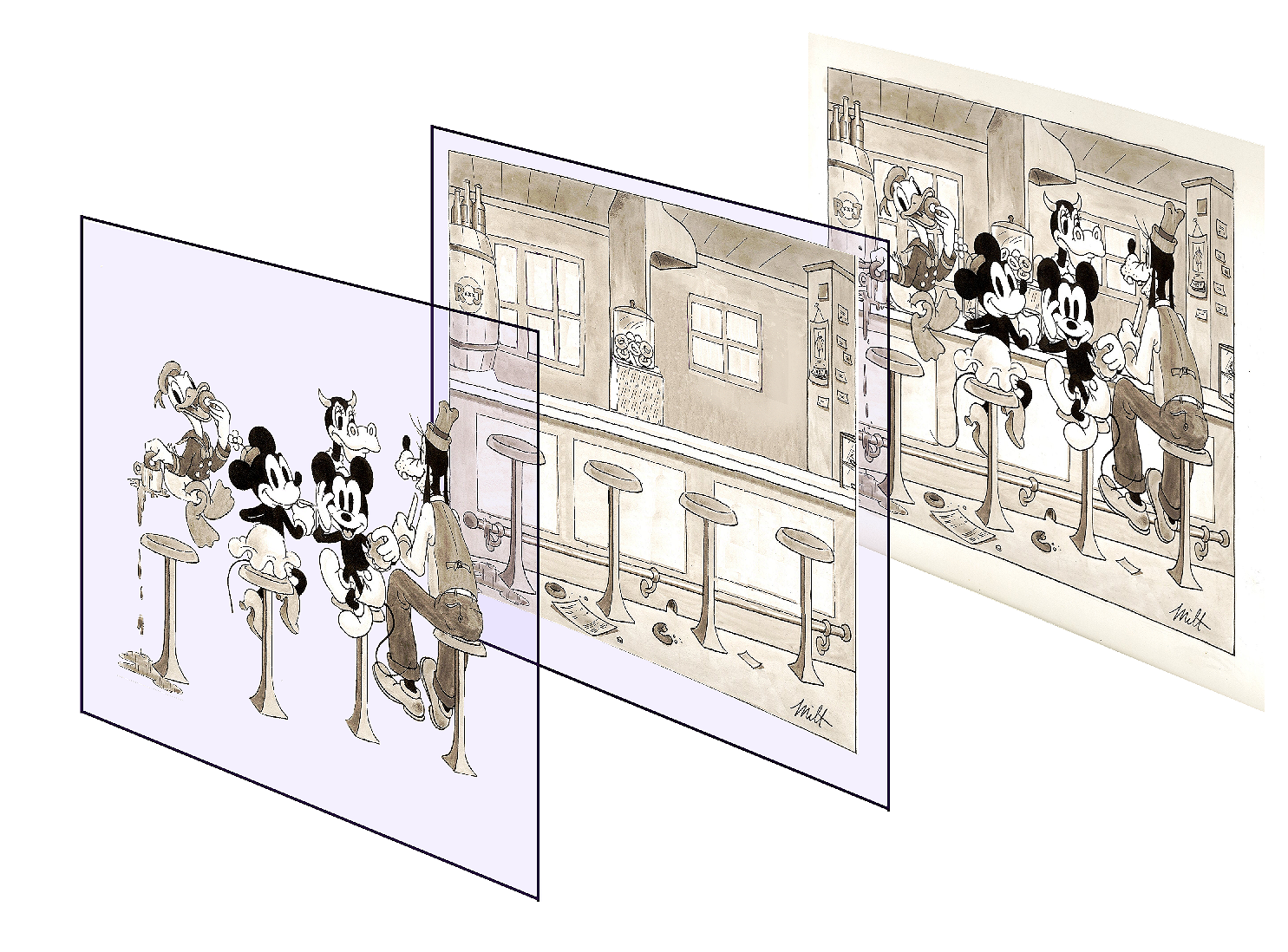
mickey's cafeI apparently had a relative of some sort, a guy named Milt, who worked at Disney Studios sometime in the past. Hanging on my wall is a drawing that I inherited from my Grandmother, after we moved her out of her house in a little town in Eastern Oregon. An original ‘Disney’ drawing—probably a personal project. I used the image to explain the concept of layering in digital art, the great tool that makes Adobe Photoshop the ‘giant’ it is; the digital giant that the .psd file is. A digital algorithm that enables ability to create a ditital drawing using transparent layers—the digital equivalent of the ‘cels’ [celluloid sheets] Disney used to create his animations. Disney created his early animations by photographing layers of transparent cels, which gave his animations the illusion of depth.

After the post-war strike, Disney’s enthusiasm for creating ‘art’ rather than making cartoons, disappeared. He started turning his real interest to television, while his studio continued to turn out feature films. Eventually his interest turned to Disneyland.

Walt Disney touched everyone in America who has lived in the 1950’s and beyond. I realized this week that Disney was foundational to my early life. I grew up with a television as a babysitter [two working parents]; and Walt Disney provided a lot of my entertainment. He also told me about my ‘history’—a white, conservative, ‘American Dream’ history. I think Disneyland was still new when my parents took me there, along with a million other white, conservative, American families. The Disney version of American history omitted “Manifest Destiny” and the genocide of the people who were here before the Europeans arrived, in Frontierland; ignored Slavery and Civil Rights in Fantasyland; and the Atomic Bomb in Tomorrowland; and all of the atrocities carried on by the real version of American history.

The Disney version of the world created some of the most enduring stories in American culture. Many today want to return to that world—one that really didn’t exist beyond parts of rural America. A vision of small town America that didn’t translate well into the urban environment. Geographically, America is mostly made up of rural towns; in terms of population, America is mostly made up of urban-dwellers. Cities where knowing your neighbor takes a lot of effort [more effort than I want to put out].

In spite of all of his cultural shortcomings [against the advice of the NAACP, Disney’s Song of the South was filled with ‘darkies singing happy songs;’ and premiered in Atlanta, where the story’s hero, ‘Uncle Remus’ was not allowed into the all-white theater], the truths his stories tell told remain true: if you live for others, you’ll find a reason for your life.

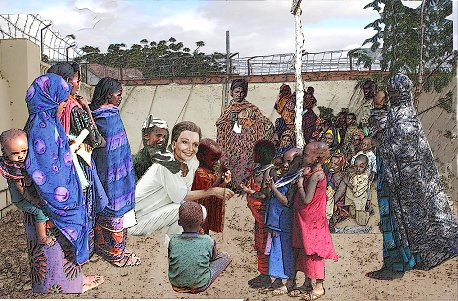
Audrey p22-23From an unpublished biography of Audrey Hepburn

Audrey Hepburn was a sensation in Hollywood in her day. Surviving privation in Belgium during World War II, she emigrated to the UK to study ballet. Life being what it is, she instead became an actress, a virtual ‘overnight success’ after her role in Roman Holiday, opposite Gregory Peck. After she retired from movies, she devoted her life to UNICEF. My guess is that her impact as UNICEF’s ambassador far outweighed her career as an actress. Her life had taught her that her life was not about her.


← Back

Thank you for your response. ✨

Chronicles in Ordinary Time 79: Change the World

September 1, 2015

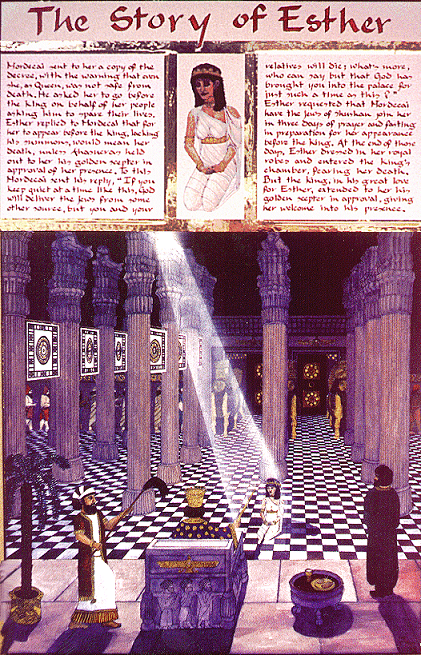
EstherThe Story of Esther, acrylic
permanent collection: Museum of Biblical Art, Dallas, Texas

Tonight [my tonight] there are fanatics in Syria, destroying thousands of years of art and architectural history, in the name of religion. This has happened before, in Western history; we call it iconoclasm. Part of the reason there is so little visual art in Protestant churches is a result of the iconoclasm that took place in the 1500s during the Protestant Reformation. The historical link, in the Abrahamic faiths, is a literal interpretation of the Creator’s command that man shall not make ‘graven images’—the creation of idols that are worshipped in place of the Creator. Israel’s “Golden Calf” being a prime example. People still make idols that sit on dashboards of cars and are enshrined in homes. In the American culture of today, many of our idols are concepts—we even name television shows after them…We make idols all the time. The Creator knew this from the beginning of Eternity. The Creator also gave us free will—the ability to choose how we live our lives. And the Creator gives us the power to get past our idols.

I am a man of faith, and I am an artist. I am grateful to The Sisters of the Holy Names at Marylhurst, and other Catholic friends who helped me to resolve the differences between art that represents faith, and art that creates idols. More of my art is digital these days—my hands and eyes don’t work as well as they did in earlier times. Part of me ponders the idea as to whether or not digital images—patterns of light upon a screen—can even be considered ‘graven images’—the images don’t even really exist until they are printed on some type of medium. At that point, they really aren’t the created image, they are a copy of the image, subject to idiocies of printing equipment.

When my brain hurts because of the actions of extremist fanatics, I find myself retreating to science fiction movies—particularly of the genre inspired by Gene Roddenberry and the creators of the Stargate saga. Roddenberry believed in a future where the ideology that separates people can be overcome; that people of different races, religions, ideologies could live together in harmony rather than always being in endless war. These stories present the idea that we can become better people. Always working at becoming better people. Semper opus fieri meliores for those who believe that a phrase is always more cool in Latin…

This way of thinking seems hard to find, in today’s world. Here, the world runs at the whim of the rich and powerful—today’s American idols. People in masses tend toward violence and hatred; and fear of the unknown.

Individuals, and groups of individuals can actually create positive change. I’ve seen it happen, I see it happening every day, in small ways; small steps that can become giant leaps. Will the 98% overthrow the 2% and the fractions of the 1%? Hard to imagine, given that we keep electing millionaires and aspiring millionaires to the seats of power in government… This is the 10th Anniversary of Hurricane Katrina and its destruction of the Gulf Coast. Ten years on, there is still a lot of damage to be undone. The promises of government have not been kept. The actions of individuals working together have demonstrated what faith, hope and love can accomplish.

There are ideas and ideals that money and power cannot buy. Most lottery winners end up broke in a few years. From what I understand, most millionaires end up with broken families. I am neither rich nor famous—I have aspired to both in my time—but I am richly blessed in that I have a family that aspires to be better than they are at any given time. It takes a lot of work and commitment. Compared to much of the world, I am rich. My net worth is a positive number.

How do we change the world? One act of random kindness at a time.

A few years ago, without permission, I edited the movie “Evan Almighty” into a-few-minutes-long synopsis video. The file [link below the image] is fairly large so it will take a few minutes to download…

One Act of Random Kindness… can change the world for the better.

evan_almighty

http://mjarts.com/videos/Change_the_World2.mov


← Back

Thank you for your response. ✨

Chronicles in Ordinary Time 78: the tracks we leave behind…

August 27, 2015

My desire for the last few weeks has been to write something upbeat…it’s just very hard, looking at the world and the way it is.

Sitting BullWe will be known forever by the tracks we leave behind.

Lakota Proverb

I watch a lot of movies. Now that my time is not as tied to a schedule as it has been in the past, and because I spend about 1/3 of my day in a chair in the living room, I watch even more movies/DVDs…they occupy my mind while my hand and eye are working together.

I’m not sure why I’ve never watched “Bury My Heart at Wounded Knee” before. I spent several months, back in the 90s, researching our American history and our treatment of the ‘indigenous people’ who occupied our continent until we—white folk—drove them off their land. I’ve heard that there were something like 500 nations in the Americas before the Europeans arrived.

I’ve also spent/invested the last two weeks of my time investigating my family history. As an adult I’ve largely considered myself as an ‘immigrant child’—I’m ‘first generation on my Mom’s side of the family [she was born in Norway]; and ‘third generation’ on my Dad’s maternal side of the family [my maternal great grandparents were Swedish, born in Finland. My paternal great grandfather comes from a family line that seems to have taken the Biblical command VERY seriously: “As for you, be fruitful and increase in number; multiply on the earth and increase upon it.” From that generation backward, it seems like every mother gave birth to a dozen children—free labor. I found an immigrant side of that family as well—one of my ancestors emigrated from England to America in the mid-1600s. To my surprise, that line of my family goes back to Charlemagne—by marriage—a Plantagenet descendant married a woman who is in my ancestral line…

I’ve been a member of churches for the last 40 years; and I was in a Christianity-based sales organization for much of the 80s and early 90s. For years I have heard from platforms and pulpits, how blessed the [white] American people are—‘the only nation created in the name of God’—and other such nonsense. The prosperity so valued began in the 50s and 60s, increased in the 80s and died in 2008…I’ve heard so many people state that our material prosperity is a ‘gift from God.’ For all of our supposed ‘prosperity’ we have an incredible number of mass murders. Divorce, unemployment, destitution.

A lot of people who ‘proof text’ the Old Testament tend to leave out the places where ‘God’s People’ were cursed because of their wickedness. The Pilgrims who arrived here were seeking religious freedom—from the Anglican Church of England at that time. It’s probably an exaggeration to state that the Pilgrims came to bring religious freedom to a new land. They weren’t seeking religious freedom for everyone—they were seeking the freedom to practice their own religious beliefs.

We tend to rewrite history to make it sound much better than it really is. It appears today that the Founding Fathers, in declaring their independence from England were really saying that “we hold these Truths to be self-evident—that all [white males] are created equal, and are endowed by their Creator with certain inalienable rights…’ However, history has caught up with the Founders and the Supreme Court has ruled that these rights mostly apply to all American citizens, without regard to gender, race or religion. One of the ‘problems’ of a Democratic Republic—the rules can change.

Tonight I’m thinking about the huge number of Native Americans who were slaughtered by European emigrants who believed they could own land [“On 8 September 2000, the head of the United States Bureau of Indian Affairs (BIA) formally apologized for the agency’s participation in the “ethnic cleansing” of Western tribes]; about the Japanese-American citizens who were sent to American concentration camps during World War II; and the hundreds of thousands killed in Nagasaki and Hiroshima, which included the murder of thousands of children. How do we overlook such wickedness…

It is far easier for me to see the world today as being under a “curse”—I’m a 21st Century enlightened American Christian who has trouble thinking of the literalness of “curses and blessings’—than it is to see the results of blessing in our world.

And then there is another quotation from the movie: “There is another road that runs beside warpath, a secret road, only known to the Christ worshippers…” for me, it is important to distinguish between the religion and the followers…they aren’t necessarily the same.

Medicine Bottle

← Back

Thank you for your response. ✨


Chronicles in Ordinary Time 77: Imagination and Inspiration

August 18, 2015

Martian landscapeImages: http://mars.nasa.gov/mro/multimedia/images/?s=326

 These are aerial photographs of the landscape of Mars.

This statement blows my mind. It ought to blow yours.

Not Hollywood. Not CGI. Photographs made with a camera that sits aboard the Mars Reconnaissance Orbiter, a satellite that’s been orbiting Mars for about 10 years; shooting photos of strangely colored sand dunes, enormous ‘dust devils’ that extend thousands of feet into the air, and create strangely beautiful shadows; avalanches near the snow-covered Poles of Mars.

However, we live in the 21st Century; and the world of the Internet. All sorts of wonders happen all of the time, and we yawn and scroll down to the next item on Facebook…

When I was a kid, back when dinosaurs ruled the Earth, I read the John Carter of Mars novels by Edgar Rice Burroughs. I read of Barsoom and its canals and an adventurer from Earth who found himself a stranger in a strange land. The books are better than the movie was.

I was 10 years old when JFK spoke these words at Rice University:

“We set sail on this new sea because there is new knowledge to be gained, and new rights to be won, and they must be won and used for the progress of all people. For space science, like nuclear science and all technology, has no conscience of its own. Whether it will become a force for good or ill depends on man…”

Full speech below

 We went to the Moon by the end of that decade; and we have gone far beyond that goal. Astronauts have inspired children the world over to “seek out new adventures and to go where no man has gone before…”

I read the works Robert Heinlein, Arthur C. Clarke and Isaac Asimov as well as dozens of other science fiction authors. Tom Swift Jr. was one of my literary heroes, and the subject of many of my internal adventures—a young inventor traveling the world and outer space, seeking to make life better. And now I can view photos of Mars, I can watch videos of Mars and its moons…as easily as I can watch Facebook.

Should we be trying to go to Mars? I’d rather see us fix up the planet we have, than to encourage us to continue wrecking this one while we find a new planet to wreck…

The problem isn’t money.

cost of war

The bottom number starts with One Trillion. A number, when applied to money, that none of us can accurately imagine. You can probably find a graphic somewhere on the Internet. These numbers of course are significantly smaller than the numbers are at this moment, as you are reading these words. You can find current numbers here.

There is no lack of money in the US and in the world for solving most of the problems of mankind; what is lacking is the willingness to sacrifice our comfort for the sake of people we don’t know. We can take pictures of Mars!—surely we can provide clean water and electricity to the planet. Can we reverse global warming? Probably not. Maybe we can slow it down.

You can inspire a child to dream; you can inspire a child to do something for good that no one in their history has ever done. You can inspire a child to become a better person than you are. By training your mind you can become a better person than you are now.

 JFK_Rice_University


“We set sail on this new sea because there is new knowledge to be gained, and new rights to be won, and they must be won and used for the progress of all people. For space science, like nuclear science and all technology, has no conscience of its own. Whether it will become a force for good or ill depends on man, and only if the United States occupies a position of pre-eminence can we help decide whether this new ocean will be a sea of peace or a new terrifying theater of war. I do not say that we should or will go unprotected against the hostile misuse of space any more than we go unprotected against the hostile use of land or sea, but I do say that space can be explored and mastered without feeding the fires of war, without repeating the mistakes that man has made in extending his writ around this globe of ours.

There is no strife, no prejudice, no national conflict in outer space as yet. Its hazards are hostile to us all. Its conquest deserves the best of all mankind, and its opportunity for peaceful cooperation may never come again. But why, some say, the Moon? Why choose this as our goal? And they may well ask, why climb the highest mountain? Why, 35 years ago, fly the Atlantic?

We choose to go to the Moon! We choose to go to the Moon in this decade and do the other things, not because they are easy, but because they are hard; because that goal will serve to organize and measure the best of our energies and skills, because that challenge is one that we are willing to accept, one we are unwilling to postpone, and one we intend to win.”

President John F. Kennedy in front of a large crowd gathered at Rice Stadium in Houston, Texas on September 12, 1962.

← Back

Thank you for your response. ✨


Chronicles in Ordinary Time 76: It’s always too soon to quit…

August 10, 2015

peacock window

A dear friend of mine recently posted some quotations from Marcus Aurelius on Facebook; a mutual friend, a woman we don’t know all that well, in reading his post remembered inspiration she received by reading the writings of this this long-dead Roman Emperor; and baby Aurelia was given her name. In the annals of history, being the instrument of the naming of a child is probably a small thing; however, she is only a few weeks old, and has her entire life ahead of her. Who knows what the inspiration from a Roman Emperor of 1900 years ago might have upon her life? The naming of each of our children was a well-thought-out experience, and I imagine it’s the same for many parents. We can never overlook the possibilities that our smallest acts contain.

This dear friend of mine has a lot of reasons for doubting the value of his life; he battles a chemical imbalance in his brain; probably a result of genes—something he cannot control. One of my ‘fears’ is that one day the chemistry will win out over what he knows in his heart-of-hearts to be true. When such ‘fears’ come upon me, I turn them over to the Author of Life, in whose name my dear friend was raised. Whatever events happen in our earthly lives, I know that we will meet again in the Life to Come. This is a promise from the Author of Life.

Sixty-three years of life; forty-two of them walking with the Author of Life. I rather wish I’d kept a list of the ‘small things’ that have happened in my life that ended up being extremely significant. Many of the ‘small things’ were barely noticed; like the song that just happened to start playing as I’m writing this paragraph [statistically, a 1/1340 chance]—The Impossible Dream, which caused to realize that there is more to live for in this life than the stuff we find around us. The story of the ‘Man of La Mancha,’ presented in a Senior AP English class in high school by “Captain Bob” Bonniwell opened the door to faith in my life. The older I get, the larger the pile of ‘stuff’ gets, and the more potent-smelling it becomes. And still I contend that it is better to live life as it could be, to live life as it ought to be lived; rather than to live life as it often presents itself in our circumstances. I never made the opportunity to thank Captain Bob. Should have.

I’ve been fortunate enough to be able to create a life for myself that allows me a lot of time to think, to ponder, to hope and to dream. The dreams are harder now, partially because the Dreambuilders I once surrounded myself with aren’t around. But I still am able to ponder and hope. I too often fail to realize what a gift my lifestyle has become for me. Most people have little time to think about LARGE concepts, such as faith. I wish I had the ability to download faith into all those who need it; I’d post it in a Dropbox and plaster the URL across the internet. Sadly, I can’t do that. By “faith” I’m not talking about religion; it often starts with religion; however, there is a Faith that transcends religion. I’m not there yet, but I can see it in the distance.

One of our shortcomings as human beings is that we tend to think that we are something special; just by being human. In today’s world, “American Exceptionalism” is probably the most insidious version of this curse—at least within the American culture. I believe that when the Creator said, “let us make man in our own image,” the Creator wasn’t talking about form. I believe that the gift we were given, that gift which is in the Creator’s image, is our ability to Create. There are other creatures that use tools; creatures like the spider that can build a web we can’t even begin to replicate—and these abilities are hard-wired into their tiny brains and neurological systems. Birds make nests; I don’t know if there are birds who have realized that all that plastic garbage we leave lying around can become weather-proof roofs over their heads…

We have the ability to create our own realities; and by this gift we are human, slightly lower than the angels. As animals, humans display a lot of behavior that is far from special. We are more than animals.

I’m in an *interesting* place in life. I don’t have ALS—it’s clear that I don’t have ALS—and yet I can’t help but wonder if what I experience is similar to those with ALS: watching my body ‘dissolve’ around me. I end most evenings [early mornings to much of the world] watching ‘hero stories’ on DVD. I find that drawing-time seems to work best after 10p or 11; and lasts for 3-4 hours; after which it simply hurts too much to keep sitting down. So I move to the couch, and watch a couple hours of ‘hero’ stories; and then I try to figure out how I’m going to get off of the couch, and make my way to bed. I was at a friends’ house yesterday, and sat down on a footstool; I immediately realized that this was a bad choice, because the footstool turned out to be much squishier than I expected it to be. When it was time to leave that room, I waited until I was the last one there, so I could figure out what method I’d use to get myself from footstool to standing up… I honestly can’t tell if it’s a strength issue or a function [lack of] issue. Getting up from the footstool was awkward, and I am innately self-conscious.

There are a couple of old guys in my life, guys who cannot [yet] cope with the idea of ‘new normal’—a new set of conditions in their lives that make their former plans extremely difficult to achieve. Neither of them live with the difficulties that one of my heroes lives with; a woman who has lived most of her life in a wheelchair, with a body that mostly does not respond to her control. She’s endured more operations than she has years in her life. Her physical abilities are far less than those of the two old codgers I’m writing about; and yet they have trouble finding a reason to stay alive. My hero-friend has been making that choice for a long time.

We make choices as to how we will live our lives. Some of us have horrible crap to overcome; some of us merely have inconvenience to overcome; and we think that it’s ‘horrible crap’ because our view of life is too small… Each day above ground is a gift, whether or not we want to see it that way. And we are given tremendous flexibility as to how we will use this gift.

How will you use your gift, today?

How will I use mine?

Summer King

← Back

Thank you for your response. ✨

Chronicles in Ordinary Time 73: Altruism

June 14, 2015

robot 2

I watched Guardians of the Galaxy this afternoon; amusing, but I’m getting tired of ‘comic book’ movies, aka ‘collateral damage’ movies. Movies whose most prominent feature is the property damage that occurs during the battles between the good guys and the bad guys. The movies rarely, if ever, deal with the fact that lots of people lose most of their stuff, if not their lives; and that the heroes of the movie rarely help the victims recover. That’s one of the places where the difference between life and movies becomes obvious.

C.S. Lewis hoped that mankind would never venture into the solar system and beyond—his fear was that we would spread the infection of our foul natures out to the other life in the universe. Ever notice how the science fiction movies that get made so often assume that other intelligent life chooses evil as a way to live? I can’t help but wonder whether or not other life in the universe may never choose evil as a way to respond to life…

I have a friend who is angry at god because of the evil in the world. I keep telling him that most of the evil in the world comes from the hands of man; and our tendency to use our Free Will to take advantage of others. We want what’s best for ourselves and are unwilling to put ourselves out for the benefit of others. Not all of us, not all of the time; but all it takes is a few of us taking advantage of others to ruin it for the rest of the world. Too many people respond to the bad stuff that happens to them by passing that bad stuff on to others. We feel crappy, or we feel crappy about our circumstances, and we act crappy toward others. The disease gets passed on to others.

Can you imagine a world where people treat each other, treat everyone graciously? I can, sort of, because I’ve met these kind of people. Not a lot of them; and most of them wouldn’t want to consider themselves as being ‘especially good’ people—we all know our failings, and these folks would look first at their failings, and consider them more significant than the good stuff that comes so easily to them. People that decide to live an entirely different life than most of us choose. I know a young couple, with a new baby, who have chosen to live in ‘outer Mongolia’ in order to tell people about Jesus, in a world where nearly everyone has never heard of Jesus. They have a different religious belief. To those who believe that one religious belief is as bad as another, this concept has a negative tone. It used to have a negative tone for me. Life changes one. I know this couple who are giving up most of the stuff that the rest of us strive for—there isn’t anything negative there. The same belief that sends healthcare workers to fight Ebola and MERS in a different country; the same altruism that sends people to Nepal when people are fleeing earthquakes. The altruism that sends First Responders into burning buildings…

It isn’t me; my goals are more mundane and more career-related. I’ve looked at this concept for lots of years.

I like to close with another illustration; none of the people I’m thinking of would like their faces to be used—they wouldn’t want to be seen as an example. So, I’ll end with some who are anonymous, and can express joy:

silhouette tap


← Back

Thank you for your response. ✨


Chronicles in Ordinary Time 71: Missing the Point

May 3, 2015

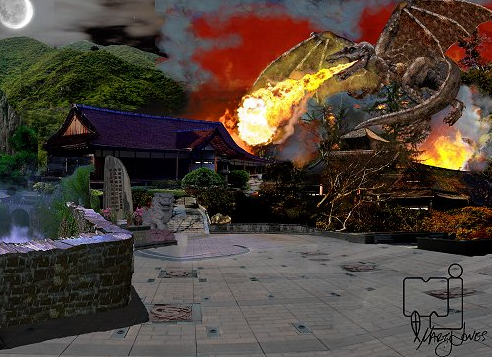
DragonFire1Dragon Fire [digital painting]

I did a ‘Hobbit Marathon’ last weekend; the third installment arrived from the library. I decided to revisit the earlier installments to get back up to speed. After watching 6 or so hours of Hobbit, it occurred to me that between the Hobbit trilogy and the Lord of the Rings series of movies, it was very easy to miss the point of the whole story—the destruction of a Ring of Great Power because it was too dangerous to be left in human [or otherwise] hands. Amidst the Hobbits, the Orcs, the Elves, the Dwarves and Trolls; amidst the Wizards and Fell Creatures, it’s easy lose sight of the main character—the One Ring.

We humans are great at missing the point.

People argue over the idea of Bible Stories being true. They bring up the quandary of whether a whale could swallow a man for three days, and miss the point of the story. The whale is actually a very minor character in the story of Jonah. The point of the story is that the Creator wants the people of Nineveh to change their way of life to that of “love justice, show mercy and walk humbly with their God.” Jonah apparently has a real problem with the Ninevites and wants God to blow them off the face of the earth; rather than asking them to change. The people change for the better, and God wins.

We tell Bible Stories to children because most of the concepts in the Bible are adult concepts that can’t be understood by children. We tell them the stories with animals and kids and Jesus’ miracles because these ideas can be understood by children. Sadly, many of those children become adults without every hearing or reading the rest of the Bible, and they never wrestle with the adult difficulties of “love justice, show mercy and walk humbly with your God.” They write off the stories they heard when they were children, because those stories don’t seem to apply with the real difficulties of life; and they write off the Bible.

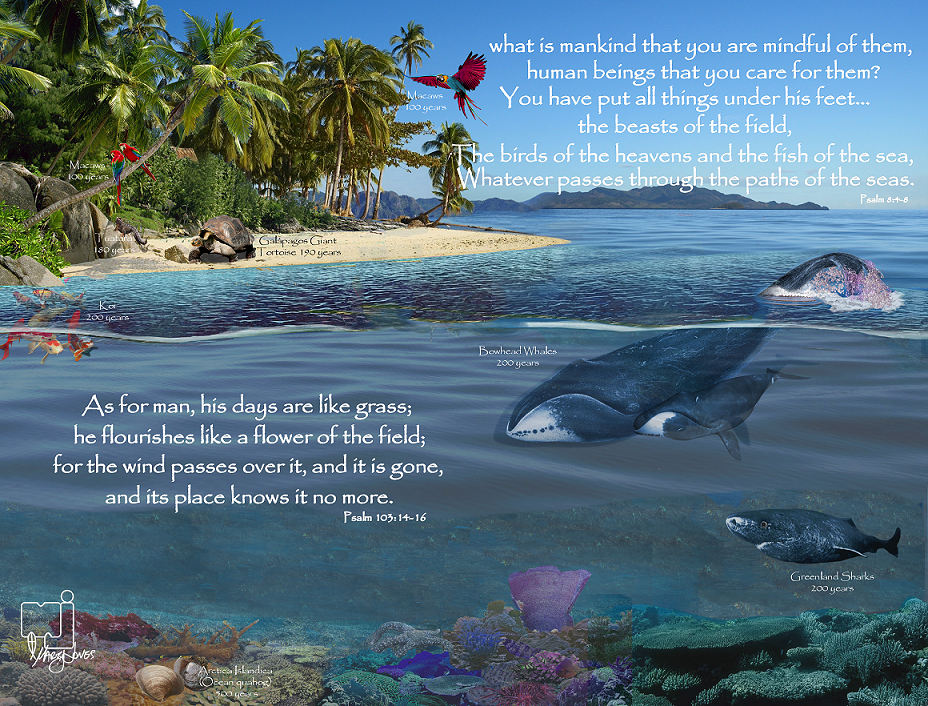
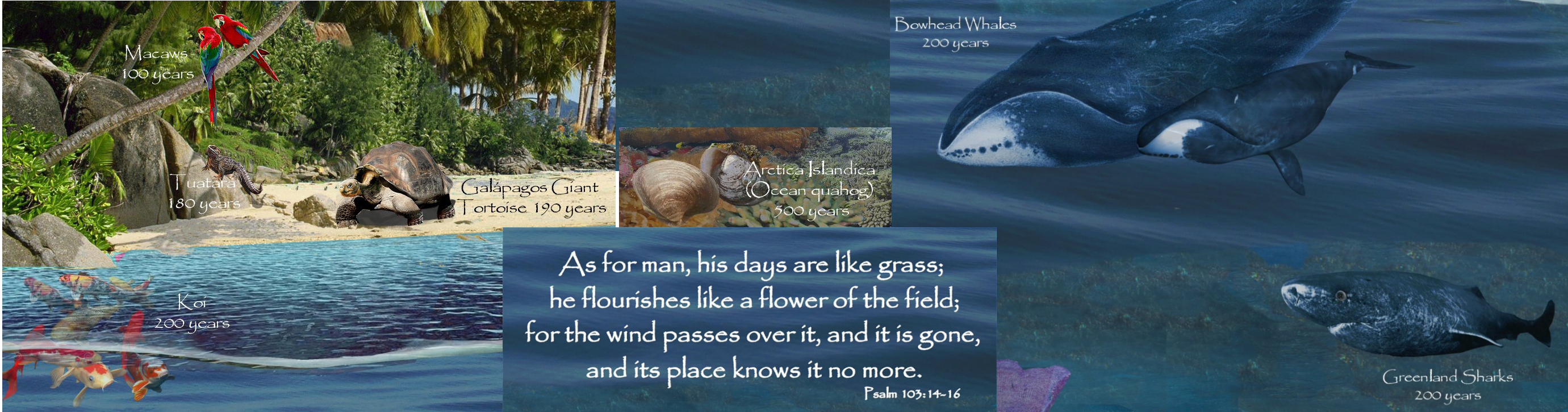
I read an article online recently, one that talked about the 10 longest-living creatures on the planet. Humans aren’t on that list.

what is man_webWhat if we are missing the point again?

The Bible talks about the great ages of the people before the Flood; and people ponder how those incredible lifespans could be…the age of an Arctica Islandia; an Ocean Quahog clam [500 years].

what is man_his days are like grassWhat if the point of all those great lifespans were simply to allow us to take care of Creation? To have a Galapagos Tortoise or a family of Macaws as friends, and to watch their life cycle?

Genesis 1:26 reads: Then God said, “Let us make mankind in Our image, in Our likeness, so that they may rule over the fish in the sea and the birds in the sky, over the livestock and all the wild animals, and over all the creatures that move along the ground.”

The Hebrew phrase: בְּצַלְמֵ֖נוּ כִּדְמוּתֵ֑נוּ וְיִרְדּוּ֩ בִדְגַ֨ת הַיָּ֜ם  can be translated: “in Our image, according to Our likeness; and let them rule over the fish…”

The word וְיִרְדּוּ֩ means to ‘rule’/’have dominion’ and is a verb; consequently the word means an action rather than a position. We are to act in the manner of one who rules over Creation; not one who tells Creation what to do, but one who nurtures Creation.

As the story continues, man, having failed to do his job correctly, gets wiped out; and God starts over again with one human family, and all of the other families of Creation. From one perspective, Man’s assignment is still the same. Take care of God’s Creation. And God promises that the world will never again be wiped out by a Flood.

This time we are doing it ourselves.

We missed the point again.


← Back

Thank you for your response. ✨


Chronicles in Ordinary Time 70: The Battle of Bedford Falls

April 29, 2015

klara_holdenfrom The Book Lover

   The title of this entry is from a movie reference, Frank Capra’s It’s a Wonderful Life. George Bailey of Bedford Falls opts to take the role of Rescuer instead of the role of Adventurer; and the decision changes the course of his life. He takes on a job he doesn’t want, in order to rescue his family; he marries, ends up living in a drafty old house, takes on the role of father and ends up taking the fall for a mistake supposedly made by a daffy old uncle. On the verge of bankruptcy, he attempts suicide; and is rescued by an unlikely [and non-Biblical] angel. Clarence the angel gives George the gift of seeing what his world of Bedford Falls would have been like had he never been born…

The Battle of Bedford Falls is the battle of making it through another day when everything inside of you wants to opt out of the experience. There are a lot of other options to suicide that accomplish a similar task—‘opting not to play the game’ one more day; and immersing oneself in a variety of activities that postpone the inevitable.

When I started writing for public consumption—this venture into online journaling—I decided that I would only write about things I know about; things in which I have some expertise. I don’t write to gain “followers”—although they are appreciated; and I don’t write to ‘monetize’ my thoughts. I write as a way of exploring my life and myself, and hopefully express in words some thoughts that others may not be able to find the words for. Occasionally using bad grammar…

My only areas of expertise are subjects related to the Building Code; and a very particular style of illustration. These aspects of my life don’t offer a lot of practical wisdom [I wish I’d had more of the former, when I was building the house I’m in]. I’ve built houses, written City policy, raised kids into adulthood and stayed married for nearly 39 years. I’ve rarely left Portland; and at the same time have traveled to the Gulf Coast and to Mexico a few times for construction-related mission work.

I have years of training in how one can change their life for the better, and I’m happier with ‘me’ than I was 30+ years ago; but I only know how to change me—I can’t change other people. The most that I can do is create an environment where people can change, if they desire change. I can offer suggestions [many of which are for me, facts]—but until someone accepts my ideas as their own, they are simply ‘suggestions’. I can provide people with a list of books to study, but I can’t make them read the books or try to implement them into their lives.

There’s rioting in Baltimore; perhaps not tonight, but there has been rioting over the last few days. Rioting in lots of cities, reminding me of the late 60’s—the rioting then had different causes. Throughout the Twentieth Century and overflowing into the Twenty-first, we have become a people who prefer antagonism to mediation. Despite a century of bloodshed, people still pick up weapons in order to feel safe. The proliferation of weapons isn’t making us any safer.

The Battle of Bedford Falls—how do we get through today?

I feel shitty most days, at the start of my day; I start the day, these days, feeling like I did at the end of the day in the past. Due to my neurological issues, my entire body feels wrong; my legs, from the knees down feel wrong, but I’ve been walking for something like 60 years; my muscles know how to walk. I choose to ignore how I feel and walk anyway. The reality is that I know of dozens of people who are in worse shape than I am. So I start my day in prayer, listening to music that turns my mind toward the Creator and my inner self. I ‘lift people up’ in my prayers—I’m not smart enough to tell the Creator what His creation needs. Praying for others takes my mind off of myself. Do my prayers change the world? I have no idea. They change me, over time. Among those changes are a growing list of people—I pray for people I don’t know, I pray for people I’d rather not talk with.

I make sense out of my life by the belief that this life is but an eyeblink in the span of Eternity. I was told long ago, that we are minds with a body, rather than the reverse. Over time I have come to believe that we are Eternal souls that have a mind and a body. That Earth is a place where we are intended to learn how to live well with our fellow creatures. I believe there is another ‘plane of existence’ that isn’t tied to bodies and disease and suffering; and that we arrive at that plane when we leave these damaged bodies behind. I also believe that we could do a much better job of living with each other than we do. It’s our greed, our stupidity, our selfishness that makes this world a garbage heap…We blame God for not stopping us from doing the things we can do by our own choice.

And this is a lousy way to end this entry…probably indicative of my mood—I’ve been repairing a washing machine over the last couple of days, and I dislike the toll it’s taken on my body and mind. It used to be a lot easier.

In spite of a lot of evidence to the contrary, I look forward to seeing what another few years will bring into my life. I’ve met people I would not have met before; there are people I care about now that I didn’t know a couple of years ago. Granted, I’m not seeing a lot of points on the ‘win’ side of the ledger these days, but I lack the ability to see into the future. I have to wait for the future to show up. I see my kids overcoming huge obstacles, and I believe they will continue to move forward. Every day I see indicators of positive change for the future of mankind—if we will stop fighting each other long enough to pay attention. We walk in the shadows of giants; and I believe we will see more giants in the future, if we will simply pay attention.

← Back

Thank you for your response. ✨

Chronicles in Ordinary Time 66: Story

February 25, 2015

My new gallery at Artistically Social:

https://www.artisticallysocial.com/users/mjartscom/gallery/

Marty Jones’s Stock Media: http://www.pond5.com/artist/mjarts

I started this illustration career in order to tell stories…

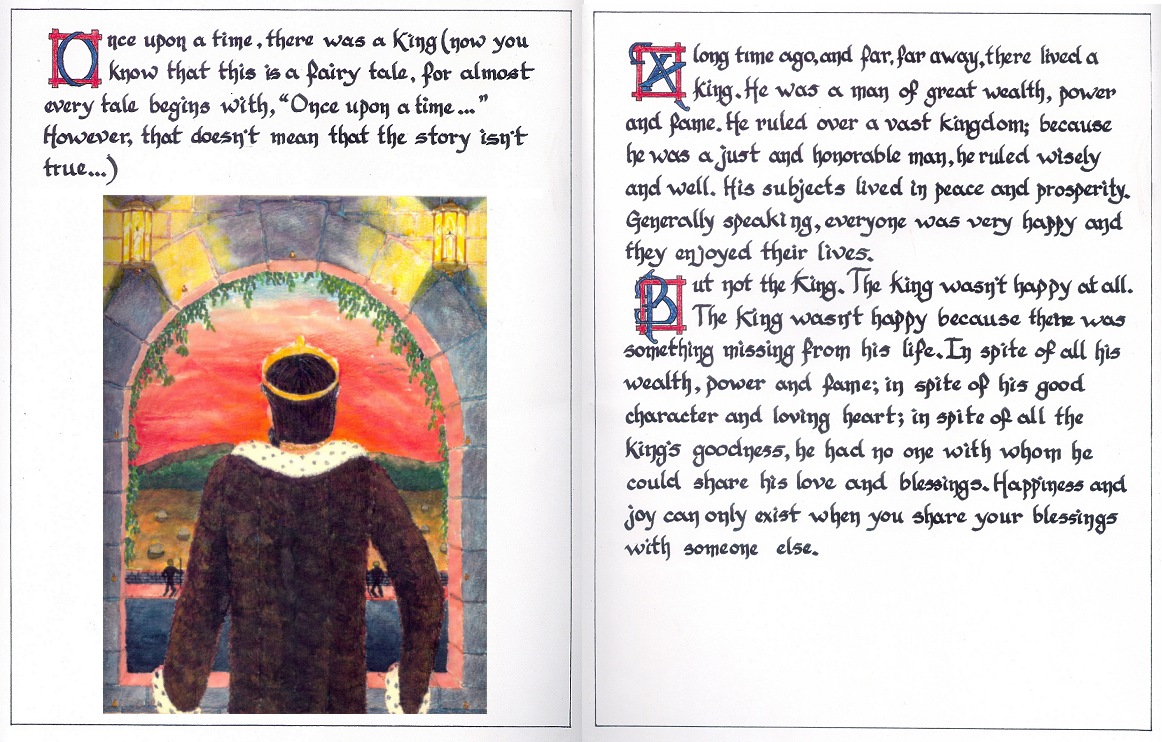
KQ1From my 20 year old, unfinished children’s book, “The King’s Quest”

But life doesn’t always work out the way we plan… Rarely?
My own projects have almost always had to wait their turn until I take care of income-producing projects.

One of my favorite musical artists is Stephen Curtis Chapman, particularly in his recent, middle years…
“And it may feel like 40 long days in a hard driving rain
Or 40 years in a dry desert sand
But when He’s finished we will see a beautiful tapestry
And know that nothing has been wasted in the end
Oh, and God will, He will finish what He started
No thread will be unwoven
Nothing will be left undone
Every plan and every purpose
That He has will be accomplished
And God will finish what He’s begun”

From “Finish What He’s Started” Steven Curtis Chapman

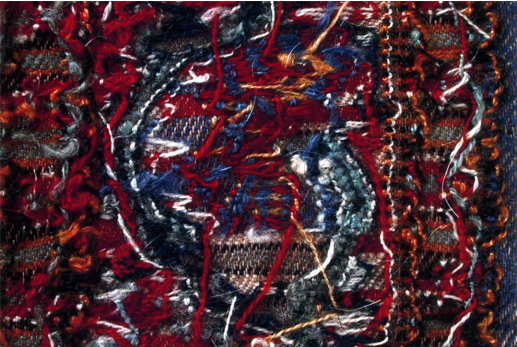
The back side of a tapestry doesn’t always look the same as the front side:

tapestryUsed without permission from
http://www.textiletextbooks.com/textilemania/u_4/u_4_3.html

 Sometimes the story of my life feels like this:
yarnI forget where I found this image; my apologies.

The story of our lives.
Bible teachers for a hundred years have talked about how here on earth, we only get to see the back side of the tapestry of our lives; when we get Home, we’ll be able to see the front side; and we will be amazed.

This has been an unpleasant ‘week’ for me [it started last week]; pain and weakness to the point where I haven’t been able to concentrate on work. The FEAR [False Evidence Appearing Real] is that I would be stuck in that state—still functional, still able to pass time; and pretty-well only being able to pass time. I’ve been either sleeping on my waterbed fully-dressed, or lying on our well-insulated couch under layers of clothing and blankets. My sensory nerves are mostly shot; I rarely feel warm, I feel the absence of cold. With enough insulation, I can feel what probably is ‘hot’ but to me is pleasantly warm. The ‘warm’ signal will drown out some of the pain signals.  I soak through the inner layers of clothing with sweat, which I can’t feel until the dampness cools down.
I love watching movies, and our library is great—thousands of movies that I can watch for free. But I want to do more than watch movies for the next years of my life.

I want to do more with my life than merely pass time—this is one of the fears that most people my age and older come to. “Waiting for God” as one BritCom called it.

I want the story of my life to have meaning. I am coming to terms with the idea that my life won’t be the story I wanted it to be. When I’m more faith-filled, like right now as I’m typing, I can live in the hope that the mess on this side of the tapestry will look far different when I’m Home; and that the mess will tell a story. I believe that I am designed for Eternity, and that this life, even if it contains 40 years of pain, will only be an eyeblink in the span of Eternity.

…and that my reaction to the tapestry I will be shown will be more like this:

Audrey red

…without the dress. I’m a blue jeans kind of guy…


← Back

Thank you for your response. ✨